
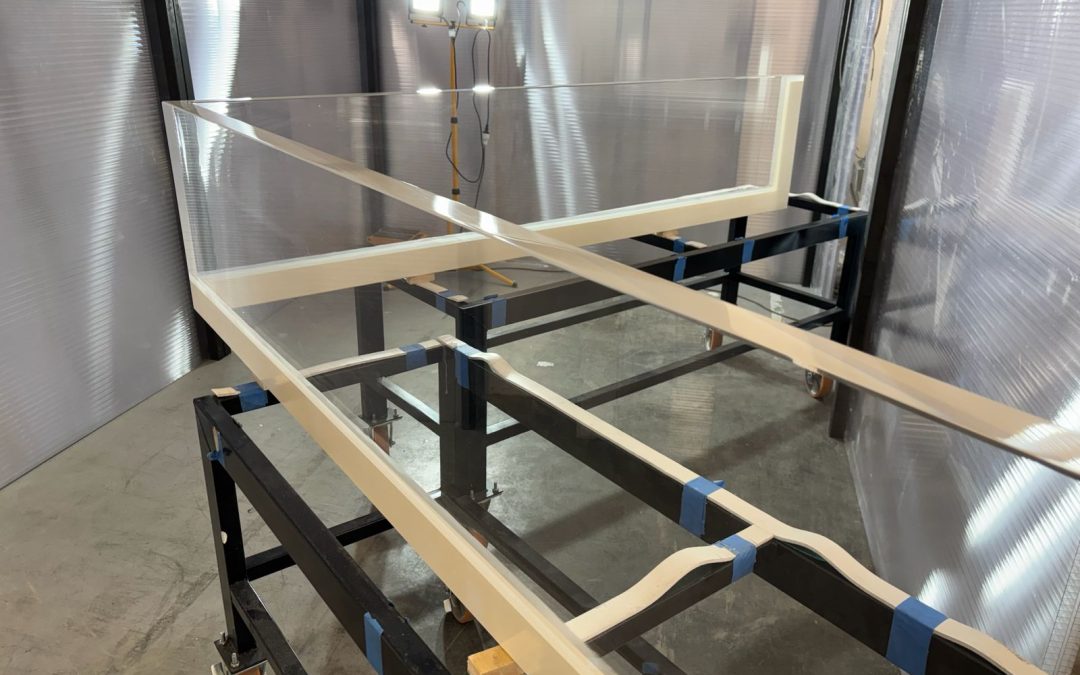
Few materials have transformed architecture and design as dramatically—yet quietly—as acrylic (PMMA). What began as a scientific curiosity is now the backbone of skypools, aquariums, and avant-garde art. Here’s the untold story:
1933: A Lab Accident Changes Everything
German chemist Otto Röhm first patented polymethyl methacrylate (PMMA) for shatter-resistant windows in aircraft. WWII accelerated its use in submarine periscopes and bomber canopies—where clarity and strength were lifesavers.
1960s: The Aquarium Revolution
The first giant acrylic panels replaced glass in public aquariums, enabling:
- Uninterrupted underwater views (no metal frames).
- Curved tunnels that immersed visitors.
Fun fact: Early adopters like San Francisco’s Steinhart Aquarium saw visitor numbers double.
1980s-90s: Luxury Embraces PMMA
Architects discovered acrylic’s potential for:
- Infinity pools (first transparent-edge pool: 1985).
- Retail displays (Chanel’s fog-resistant vitrines).
- Art installations (Dan Flavin’s fluorescent light sculptures).
2000s-Today: Engineering Marvels
Ocean Acrylics’ team pushed boundaries with:
- Dubai’s Skypools: Defying gravity in 300m-high towers.
- Bonding breakthroughs: Bonding that outlasts the structures they hold.
Why This History Matters
Understanding PMMA’s evolution helps architects:
- Trust its durability (90+ years of real-world testing).
- Innovate fearlessly (every decade unlocks new applications).
✨ حيث التاريخ يصنع المستقبل // Dove la storia crea il futuro.